10 Tips for Choosing Sliding Patio Doors

Choosing new sliding patio doors can change how a room feels, performs, and connects with the outdoors. Sunlight may reach a darker corner, while a wider opening can make a compact living area feel less confined. Yet attractive glass alone does not guarantee a good investment. Frame strength, weather seals, locking hardware, and smooth operation deserve equal attention.

This guide examines ten practical tips for selecting sliding patio doors with greater confidence. It considers glass efficiency, ventilation, threshold design, maintenance, security, and installation quality. A professional installer should check the opening carefully, including its width, height, level, and surrounding structure. Small measurement errors can cause drafts, sticking panels, or costly adjustments later.

Measure twice. Details matter.

Real-world experience also reveals a less obvious issue: a door that glides beautifully in a showroom may behave differently beside a windy garden or salty coastline. Track design, drainage, and local exposure can affect daily performance. Climate, household routines, children, pets, and furniture placement should influence the final choice. Appearance still matters, but it should support practical use rather than hide weaknesses. Some recommendations may not suit every property, and product claims deserve careful verification through manufacturer specifications and independent reviews. A thoughtful comparison creates a clearer balance between comfort, durability, energy performance, and budget.
10 Tips for Choosing Sliding Patio Doors

Assess Your Patio Space and Door Opening

Before choosing a sliding patio door, measure the space around the opening, not only the existing frame. Record the width at the top, middle, and bottom. Do the same for height. Uneven readings may indicate settling or an aging frame. Leave room for the panel to slide fully without striking furniture, planters, or exterior lighting. Check the interior path too. A sofa corner can block a perfect-looking doorway. I still measure twice. That habit prevents expensive corrections.

Inspect the rough opening, sill, wall condition, and drainage path. Moisture stains, soft wood, or cracked masonry require professional evaluation before installation.

The U.S. Department of Energy reports that windows can account for 25% to 30% of residential heating and cooling energy use. A poorly sealed patio door may add to that loss.

Review the door’s U-factor and solar heat gain coefficient through the National Fenestration Rating Council’s certification system. Lower U-factor generally improves insulation, while SHGC should match the local climate and sun exposure. North American fenestration guidance also emphasizes proper flashing and air sealing around the opening. Do not rely on foam alone.

A careful installer should check plumb, level, square, and sill support. My rough sketch is often imperfect, but it reveals conflicts early.

A few minutes outside, with the door fully open, can expose clearance problems that floor plans miss.

Compare Sliding Door Materials and Frame Designs

Choosing Sliding Patio Doors

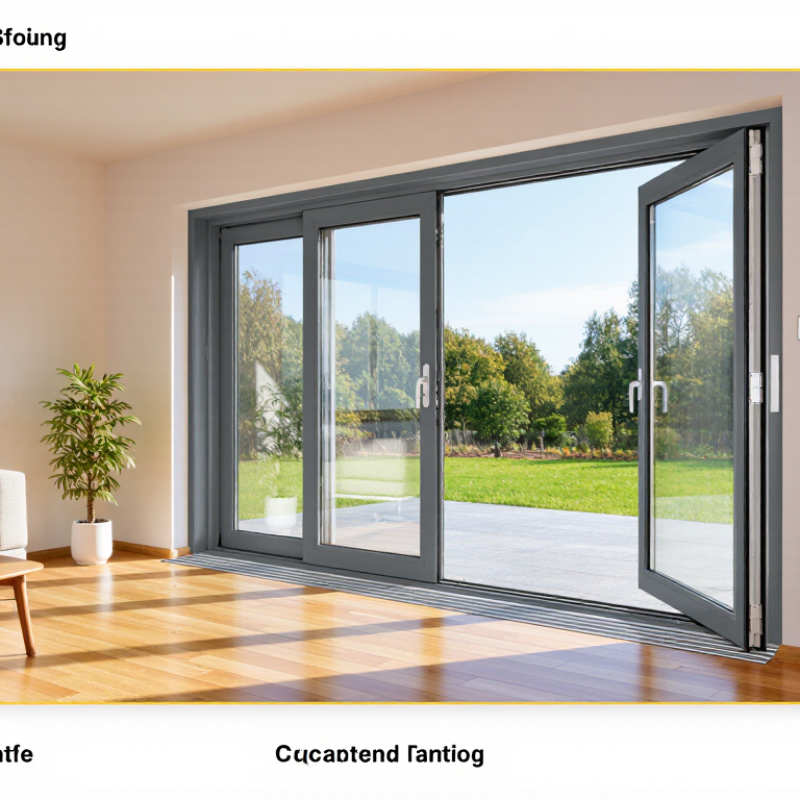
Tip 1: Compare the materials before admiring the view. Vinyl frames resist moisture and usually need little maintenance. Aluminum frames look slim, but they can transfer heat unless they include a thermal break. Fiberglass offers strong insulation and stable dimensions. Wood feels warm and traditional, yet it needs regular sealing. There is no perfect material. Your climate and maintenance habits matter more than appearance.

Tip 2: Study the frame design closely. A narrow frame creates more glass and brighter rooms. However, thinner profiles may require stronger reinforcement, especially for wide panels. Check the meeting stile, track, and corner joints. They should feel solid, not hollow or flexible. I once focused too much on glass area and overlooked the track design. That was a poor comparison.

Tip 3: Test everyday performance in person. Slide the panel several times. It should move smoothly without lifting or scraping. Look for adjustable rollers, replaceable weather seals, and a sloped sill that directs water outside. Low-emissivity glass can improve comfort near sunny windows. Ask for tested air, water, and wind ratings, then compare them with local building requirements. Installation also matters. An excellent door can leak when the opening is measured or flashed carelessly.

10 Tips for Choosing Sliding Patio Doors - Compare Sliding Door Materials and Frame Designs

Tip Comparison Dimension Common Options Relevant Facts Practical Recommendation
1 Frame material Vinyl, aluminum, wood, fiberglass, or composite Vinyl generally requires little maintenance. Aluminum is strong and slim but conducts heat more readily unless it has a thermal break. Wood provides natural insulation but needs periodic protection. Fiberglass and composite frames are dimensionally stable and typically resist moisture-related movement. Select the material according to climate, maintenance capacity, desired sightlines, and budget rather than appearance alone.
2 Frame design and sightlines Standard, narrow-profile, multi-panel, or corner-opening designs Narrower frames can increase visible glass area, but structural requirements, glass weight, wind exposure, and panel size limit how slim a frame can be. Larger openings may require reinforced framing and more robust hardware. Prioritize the required opening width and structural performance before choosing the slimmest available profile.
3 Glass configuration Double-pane or triple-pane insulated glass; low-emissivity coatings; inert-gas fill Insulated glass reduces heat transfer compared with single glazing. Low-emissivity coatings help control radiant heat, while gas-filled cavities can improve insulation when properly sealed. Performance varies by glass makeup and spacer design. Compare the whole-door U-factor and solar heat gain coefficient, not glass features in isolation.
4 Weather resistance Single, dual, or multi-point seals; sill pan; drainage channels Sliding doors rely on gaskets, interlocks, sill drainage, and correctly installed flashing to resist air and water infiltration. A well-designed sill should direct incidental water toward the exterior rather than into the room. Check tested air-leakage and water-penetration ratings and use installation flashing appropriate for the wall construction.
5 Track and roller system Top-hung, bottom-rolling, adjustable rollers, stainless-steel or corrosion-resistant components Bottom-rolling systems carry much of the panel weight at the sill and require a clean, properly aligned track. High-quality adjustable rollers help compensate for minor installation tolerances and maintain smooth operation. Choose accessible, replaceable rollers and keep the track free of grit, leaves, and standing water.
6 Threshold and accessibility Standard raised sill, low-profile sill, accessible threshold Lower thresholds can reduce tripping risk and improve access for wheelchairs, strollers, and carts. However, very low profiles must still manage exterior drainage and weather exposure correctly. Balance accessibility with local rainfall, exposure, drainage design, and applicable building requirements.
7 Security features Keyed or integrated lock, anti-lift protection, reinforced meeting stile, security bar A strong lock is only one part of security. Anti-lift devices, secure frame attachment, reinforced interlocks, laminated or impact-rated glass where appropriate, and correctly adjusted panels can improve resistance to forced entry. Verify that the complete door assembly has suitable security testing or certification for the installation location.
8 Climate and solar control Clear glass, low-emissivity glass, tinted glass, exterior shading South- or west-facing doors may receive significant solar heat, depending on location and season. Lower solar heat gain can reduce overheating, while suitable visible transmittance preserves daylight. Use climate-appropriate glass and combine it with overhangs, shades, blinds, or exterior screens when solar exposure is high.
9 Maintenance and serviceability Accessible tracks, replaceable weatherstripping, serviceable rollers, durable finishes Dirt in the track, worn rollers, damaged seals, and poor alignment are common causes of difficult operation and air leakage. Wood finishes generally need more upkeep than many factory-finished synthetic or metal surfaces. Confirm how rollers, seals, locks, and glazing can be replaced without removing the entire frame.
10 Size, operation, and total cost Two-, three-, or four-panel layouts; fixed and operable panels; standard or custom dimensions More panels and larger glass areas can increase material, structural, delivery, and installation costs. A fixed panel is usually simpler to operate, while multiple moving panels can provide a wider opening but add hardware and adjustment requirements. Measure the rough opening, furniture clearance, traffic path, and exterior landing area, then compare purchase, installation, maintenance, and future repair costs.

Note: Actual thermal, air, water, structural, and security performance depends on the complete door assembly, local climate, installation quality, and applicable building codes. Review independently tested ratings before purchase.

Choose Glass Features for Light, Privacy, and Energy Efficiency

Choosing sliding patio doors starts with the glass, not the frame color.
Clear glass brings generous daylight into kitchens and living rooms. However, strong afternoon sun can create glare on floors and screens. Consider low-emissivity coatings, which manage solar heat while preserving a bright view. Ask for the window’s tested U-factor and solar heat gain coefficient. A lower U-factor generally means better insulation, while SHGC should match your climate and exposure.

Privacy needs vary by room and time of day. Frosted or textured glass softens silhouettes without making the room feel sealed. Reflective glass can help during daylight, but it does not guarantee nighttime privacy. Interior lights may reverse the effect. Layering blinds or curtains provides more dependable control. Small details matter. Check whether the chosen glass still looks clear from your sofa at eye level.

In my own door selection, I favored maximum transparency and underestimated summer glare. I later wished for a softer coating or exterior shade. That mistake taught me to observe the opening at morning, noon, and sunset. Ask an installer about laminated or tempered safety glass, edge quality, seals, and condensation resistance. Glass performance can change with orientation and installation. A well-rated panel may still disappoint if air leaks around the frame. Review the specification sheet, confirm local energy requirements, and request written performance data before ordering.

Evaluate Security, Weather Resistance, and Operating Hardware

10 Tips for Choosing Sliding Patio Doors

Tip 1: Check the locking system from both sides.

A strong sliding door should have a secure latch, a keyed lock, and an anti-lift feature. Try lifting the panel slightly before installation. Excess movement may reveal weak track protection. Tempered or laminated glass also adds resistance, but glass strength alone is not security.

Tip 2: Study weather resistance in real conditions.

Look for tight perimeter seals, drainage channels, and corrosion-resistant frames. On rainy days, inspect the sill for standing water. A raised threshold can improve drainage, although it may create a small trip edge. That trade-off deserves attention. Ask for air, water, and wind performance data, not vague claims.

Tip 3: Test the operating hardware personally.

The panel should move smoothly without scraping, jolting, or excessive force. Rollers, tracks, handles, and adjustment screws need durable construction. Dirt collects quickly in lower tracks. Choose a design that allows simple cleaning and roller replacement. Quiet operation matters, especially beside a bedroom.

Tip 4: Consider daily habits.

Large panels can feel impressive, but they may be difficult for children or older adults to operate. Handle height and grip shape affect comfort. Check whether screens close fully and resist gaps. Small gaps invite insects and drafts. I once trusted a smooth showroom door too quickly; after installation, its track felt less forgiving. Test the hardware repeatedly, not just once.

Set a Budget and Plan for Professional Installation

Set a realistic budget before choosing sliding patio doors.

The purchase price is only one part of the expense. Include delivery, removal of the old unit, framing repairs, hardware, sealing materials, and professional labor. Small details matter.

I once underestimated the cost of correcting an uneven opening. That mistake delayed the project and increased the final bill.

Measure the opening carefully, but have an installer verify those measurements before ordering. Ask for a written estimate with labor, materials, disposal, and possible repair charges clearly separated. A low quote may exclude essential work.

Choose an installer with relevant door and weatherproofing experience.

Check references, insurance, and local licensing requirements where applicable. Request details about the installation process, expected schedule, cleanup, and workmanship coverage. Confirm whether permits or inspections are needed for your home.

Professional installation helps prevent drafts, water intrusion, difficult operation, and premature wear. Still, skilled work cannot fix every problem. If the wall is damaged or the opening has shifted, repairs may be necessary first.

Leave a contingency fund of about ten to fifteen percent. Your future self may need it.

Protect nearby flooring and furniture before work begins, and ask how the installer will test the door after fitting. A smooth glide is useful, but proper drainage and a tight seal matter more.