What Are the Best China Patio Doors for Canada?
Choosing the right patio doors for Canada is not only about appearance. It is about surviving freeze-thaw cycles, wind-driven rain, deep snow, and daily family use.
The best patio doors canada options should balance thermal performance, weather resistance, security, and smooth operation. Fiberglass frames often resist swelling and warping. Vinyl can offer strong insulation at a lower price. Aluminum looks clean and modern, but poorly designed systems may transfer cold indoors. Look for low-E glass, argon filling, durable weatherstripping, and a properly sloped sill. Installation matters just as much as the door itself. A perfect frame can still leak if the opening lacks flashing and drainage.
Mike Holmes, a Canadian contractor and building expert, often repeats this practical advice: “Do it right the first time.” His principle fits patio door selection closely. A low-cost door may seem attractive until condensation appears around the glass, rollers jam, or cold air reaches the living room. Small details matter.
No door wins every category.
This guide compares popular China-made patio door designs for Canadian homes, including sliding, folding, and lift-and-slide systems. It considers materials, glazing, hardware, energy performance, and installation support. Product claims should still be verified through independent testing and Canadian project requirements. I would not assume a factory specification guarantees real-world performance. Local exposure, installer skill, and maintenance can change the result. The strongest choice is the door that fits the climate, wall opening, budget, and everyday habits of the household.
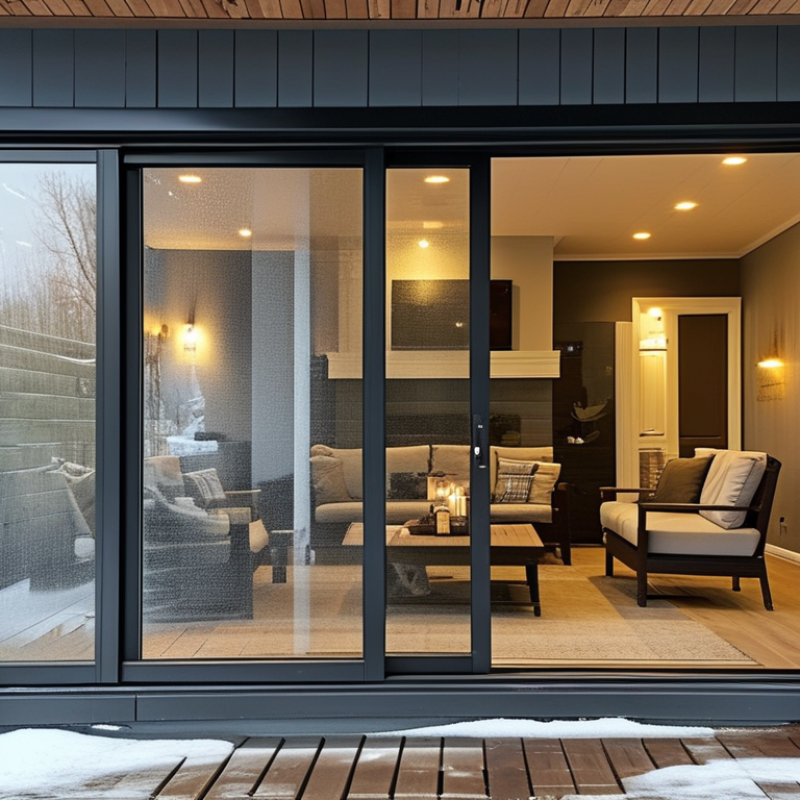
Define Canadian Patio-Door Standards: CSA A440, NAFS, and Climate Zones
Choosing China patio doors for Canada requires more than comparing glass, color, and price. Canadian performance begins with CSA A440 and NAFS requirements. CSA A440 evaluates windows and doors for air leakage, water penetration, operating force, and structural strength. NAFS provides a broader testing framework, including performance grades for pressure resistance and durability. Ask for complete test reports, not only a printed compliance claim.
Climate matters greatly. A patio door installed in coastal British Columbia faces different risks from one used in Winnipeg or northern Ontario. Wind-driven rain, deep frost, snow loads, and repeated freeze-thaw cycles can expose weak frames quickly. Check the local climate zone, required U-factor, air-leakage limits, and condensation resistance before ordering. Triple glazing may help, but glass alone cannot correct a poor frame or failed weather seal.
I would also inspect the sill design carefully. A sloped, drained threshold can reduce water problems during spring thaw. The installation opening must remain square, insulated, and properly flashed. Small gaps become obvious in January. One practical mistake is trusting laboratory ratings without checking installation details. Test results describe a product under controlled conditions. Canadian homes do not behave so neatly. Request labels showing the applicable NAFS performance grade and confirm whether the supplied configuration matches the tested size, glass, hardware, and frame. A beautiful door is not enough.
What Are the Best China Patio Doors for Canada? - Define Canadian Patio-Door Standards: CSA A440, NAFS, and Climate Zones
| Evaluation Dimension | Canadian Requirement or Reference | What to Check on a Patio-Door Specification | Recommended Direction for Canadian Projects |
|---|---|---|---|
| Product standard | CSA A440 is the Canadian standard family for windows, doors, and skylights. It addresses performance characteristics such as air, water, wind, operating force, and durability. | Request a third-party test report or certification showing the product type, tested size, configuration, and applicable CSA or NAFS performance results. | Use a door tested as a complete assembly, including the frame, sash or panel, glass, hardware, weather seals, and drainage details. |
| NAFS compliance | NAFS is the North American Fenestration Standard. In Canada, it is used with Canadian code and certification requirements for fenestration products. | Confirm the NAFS product type, performance class, gateway requirements, tested dimensions, and design pressure rating. | Do not rely only on a general “NAFS compliant” statement; match the tested configuration and size to the actual project. |
| NAFS performance class | NAFS commonly classifies products as R, LC, CW, or AW. These classes represent progressively more demanding performance levels, with the appropriate class depending on building use and exposure. | Check whether the rating is appropriate for a residential patio door, a high-rise application, a coastal site, or a high-traffic building. | For many houses, an appropriately tested R or LC product may be suitable; exposed, large, or high-use installations may require a higher class. |
| Air leakage | Air leakage is measured during fenestration testing. Lower leakage generally means better resistance to drafts and uncontrolled heat loss. | Ask for the tested air-leakage result at the applicable pressure and verify the result applies to the complete operating door. | Prioritize low air leakage, continuous weatherstripping, adjustable rollers, and a properly sealed meeting stile. |
| Water penetration | Water-resistance testing evaluates whether water enters the assembly under simulated wind-driven rain at a specified pressure. | Review the water-penetration test pressure and confirm the sill includes effective drainage and weep paths. | Use enhanced sill drainage, a correctly integrated pan or sill flashing system, and head and jamb flashing suitable for the wall design. |
| Wind-load resistance | NAFS reports design pressure, commonly expressed in pascals. Required pressure depends on location, building height, exposure, opening size, and the applicable building code. | Compare the tested design pressure with the project-specific structural calculation or code requirement. | Avoid selecting a door solely by glass area or appearance; larger panels usually require stronger frames, hardware, and anchorage. |
| Energy performance | Canadian energy requirements vary by province, territory, municipality, building type, and code edition. U-factor measures heat transfer; lower values generally indicate better insulation. | Request certified U-factor, solar heat gain coefficient, visible transmittance, and air-leakage data for the complete door. | Choose low-emissivity insulated glazing, warm-edge spacers where available, thermally improved frames, and performance values suitable for the local energy code. |
| Glazing configuration | Double glazing is common, while triple glazing can improve insulation in colder regions. Safety glazing may be required in hazardous locations. | Confirm glass thickness, insulating-glass construction, gas fill, low-emissivity coating, spacer type, and safety-glazing marking where required. | Consider triple glazing for severe winter conditions or high-performance envelopes, provided the frame and hardware are designed for the added weight. |
| Climate Zone 4: Mixed or moderate heating conditions | Climate-zone classifications are based on regional heating and cooling conditions. Exact requirements must be verified against the applicable Canadian code and local authority. | Review insulation, solar exposure, condensation resistance, and summer ventilation needs. | A well-sealed, thermally efficient double-glazed sliding or hinged patio door may be suitable when its tested values meet the project requirements. |
| Climate Zone 5: Cool heating-dominated conditions | Cooler Canadian regions typically place greater emphasis on winter heat loss, air leakage, condensation control, and durable weather seals. | Check whole-door U-factor, air leakage, frame thermal breaks, sill insulation, and resistance to interior-surface condensation. | Prefer a thermally improved frame, low-emissivity insulating glass, robust compression seals, and installation details that limit thermal bridging. |
| Climate Zones 6–7: Cold and very cold conditions | Cold regions require stronger resistance to heat loss, air infiltration, frost, and condensation. Local code requirements remain controlling. | Request low whole-door U-factor data, verified air leakage, condensation-resistance information, and cold-weather hardware testing where applicable. | Consider triple glazing, insulated or thermally broken frames, multi-point locking, high-quality gaskets, and a carefully insulated rough-opening installation. |
| Climate Zone 8: Arctic or extremely cold conditions | Extremely cold locations require project-specific assessment of thermal performance, installation, condensation, wind exposure, and serviceability. | Verify cold-climate test data, frame and sill design, seal durability, hardware operation, and compatibility with the surrounding wall assembly. | Use a purpose-designed high-performance assembly rather than adapting a standard mild-climate door. |
| Door operating type | Sliding and hinged patio doors can both meet Canadian performance requirements when properly tested and installed. | Compare seal compression, sill drainage, roller or hinge durability, operating force, locking points, and accessibility requirements. | Sliding doors suit limited floor space; hinged doors can provide strong compression sealing but need adequate swing clearance and secure anchorage. |
| Installation standard | CSA A440.4 provides guidance for the installation of windows, doors, and skylights, including integration with the building envelope. | Confirm sill pan or drainage strategy, shimming, fastening, air sealing, insulation, flashing, and connection to the water-resistive barrier. | Treat installation as part of the performance system; a highly rated door can fail if the rough opening is not drained, flashed, insulated, and air-sealed correctly. |
| Documentation for import or approval | Product documentation should be clear enough for designers, inspectors, installers, and authorities having jurisdiction to verify compliance. | Collect drawings, tested sizes, product labels, performance reports, glazing details, installation instructions, warranty terms, and replacement-part information. | Select the product with the most complete, traceable, configuration-specific documentation—not simply the lowest purchase price. |
Note: Canadian requirements can differ by province, territory, municipality, building type, exposure, and code edition. Final selection should be confirmed against the applicable authority having jurisdiction and the project-specific structural, energy, glazing, and installation requirements.
Related Posts
-

Best Sliding Glass Doors Tips for Modern Homes?
-
Why Consider Patio Door Replacement for Your Home?
-

2025 Top 10 Patio Doors: Enhance Your Home’s Style and Efficiency with Expert Insights
-
Top 10 Factors Influencing Sliding Door Cost for Your Home Renovation
-
2026 How to Choose Aluminium Sliding Doors for Your Home?
-
Top 10 Tips for Choosing the Best Patio Doors in the UK