How to Choose the Right Elastic Nonwoven Fabric?
Choosing the right Elastic Nonwoven Fabric is a performance decision, not a texture preference. The material must stretch, recover, breathe, and survive production handling. A soft roll may feel impressive, yet fail after heat sealing or repeated extension. The real test begins after converting.
Industry demand makes this choice increasingly important. Grand View Research valued the global nonwoven fabrics market at approximately USD 53.51 billion in 2022. Its report projects continued growth through 2030, supported by hygiene, healthcare, filtration, and automotive applications. Smithers’ The Future of Nonwovens to 2028 also highlights functional performance and material innovation as major market drivers. These reports suggest opportunity, but they do not choose the correct fabric for a specific product.
Start with measurable requirements. Record elongation, recovery rate, basis weight, tensile strength, air permeability, and thickness. Test the fabric before and after washing, heat exposure, or chemical contact. ISO 9073 methods can support testing for nonwoven tensile properties and elongation. ASTM procedures may also help compare recovery and dimensional stability, depending on the application. Ask whether the fabric uses spunbond, meltblown, spunlace, or a composite structure. Fiber selection matters too. Polypropylene, polyester, elastane blends, and bio-based fibers behave differently under stress. No single fabric wins. That is the uncomfortable part. A cheaper option can become expensive after rejects, wrinkles, or weak seams appear. Even experienced buyers sometimes trust supplier samples too quickly. A better decision combines laboratory results, pilot production, and honest reflection on actual user movement. Elasticity alone is not enough.
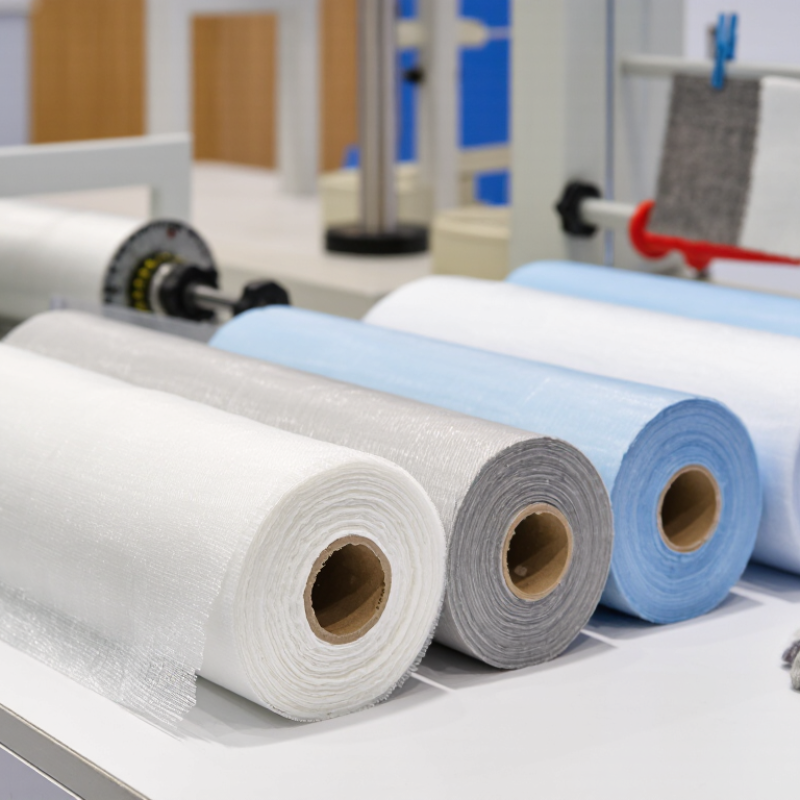
Define the Performance Requirements for Your Elastic Nonwoven Fabric
Choosing elastic nonwoven fabric starts with a clear performance brief, not a supplier catalog. Define how the material must behave during use. Measure stretch percentage, recovery after repeated extension, tensile strength, tear resistance, thickness, softness, and air permeability.
A waistband may need quick recovery, while a wound dressing may require gentle contact and controlled breathability. These applications cannot share one specification.
Field testing often reveals what laboratory numbers miss. Good point.
Set realistic conditions before selecting samples. Record temperature, humidity, contact with oils or lotions, expected washing, and the number of stretch cycles. Test the fabric at its working strain, not only at its breaking point.
Check whether it rolls, delaminates, pills, or loses elasticity after storage. I have found that a fabric can feel impressively soft on day one, yet become unstable after repeated movement.
That result deserves attention, not excuses. Safety, skin comfort, and process compatibility also matter.
Confirm thickness tolerance and bonding behavior on the intended equipment. Stronger fibers may reduce softness, so document this trade-off.
Tips:
Write pass/fail limits for every critical property. Keep retained samples from each test batch. Compare dry and damp performance.
If data is incomplete, say so. A small pilot run may prevent a costly redesign.
Recheck assumptions with actual users; technical teams can overlook ordinary discomfort.

Compare Fiber Types, Stretch Levels, and Recovery Properties
Elastic nonwoven fabric selection starts with fiber behavior, not appearance. Spunbond polypropylene offers low cost and stable structure, but limited recovery. Polyester generally tolerates heat and repeated loading better. Elastane delivers greater stretch, yet it can complicate recycling and thermal processing. Bicomponent fibers can balance softness, extensibility, and bonding performance.
Measure the fabric in use. A 20% stretch level may suit gentle waistbands or light gathers. Around 50% can support fitted hygiene components or compression panels. Recovery matters more than maximum extension. Test extension, holding time, and return after one, ten, and repeated cycles.
ASTM D4964 is commonly used for textile stretch and recovery testing. Textile Exchange’s Materials Market Report 2024 estimates global fiber production reached 124 million metric tonnes in 2023. That scale makes fiber selection a sourcing decision, not merely a performance choice. I would question every “high recovery” claim without clear test conditions.
Tips: Request samples at the final basis weight. Compare machine and cross directions. Record recovery after 30 minutes, not only immediately. Check softness after lamination. Include humidity and washing when relevant. Small test panels expose weak bonding early. A fabric that recovers well in the laboratory may feel restrictive against skin. Stretch can look impressive. Comfort may disagree.
Evaluate Fabric Weight, Breathability, Strength, and Softness
How to Choose the Right Elastic Nonwoven Fabric?
Fabric weight is a practical starting point, but it never tells the whole story. Smithers’ The Future of Nonwovens to 2028 estimates global demand will exceed 50 billion US dollars during this period. That growth increases pressure to select materials precisely. A 35–45 gsm sheet may suit lightweight apparel panels, while 60–90 gsm fabric offers better coverage and support. I have seen teams choose heavier fabric too quickly. It solved opacity problems, but reduced stretch recovery.
Breathability depends on pore structure, fiber arrangement, and compression after lamination. Test air permeability using ASTM D737, not only by touching the roll. A fabric that feels open in the lab may close under elastic tension. For strength, check tensile performance in both machine and cross directions. ISO 9073-3 provides a useful method. A 20% gap between directions can affect seams, edges, and repeated pulling. High strength alone is not enough. Excessive stiffness can irritate skin.
Softness needs both instrumental testing and human judgment. ISO 9073-4 can measure drape, but drape is not identical to softness. Run a panel test with clean, dry fabric and controlled handling. The right material should bend around a finger without cracking or noisy friction. Some results will conflict. That is normal. Recheck after washing, stretching, and storage, because the first-touch impression can be misleading.
How to Choose the Right Elastic Nonwoven Fabric? - Evaluate Fabric Weight, Breathability, Strength, and Softness
| Fabric Option | Typical Weight (g/m²) | Air Permeability (L/m²/s) | Tensile Strength (N/5 cm, MD) | Elongation (%, MD) | Softness | Recommended Uses |
|---|---|---|---|---|---|---|
| Lightweight elastic spunbond | 25–45 | 1,200–3,000 | 15–35 | 80–180 | Very soft | Diaper side panels, disposable underwear, light protective garments |
| Medium-weight elastic spunbond | 45–80 | 700–1,800 | 30–60 | 100–220 | Soft | Waistbands, medical supports, fitted hygiene products, garment panels |
| Elastic laminate with film layer | 60–120 | 100–800 | 40–90 | 120–300 | Medium to soft | Leak-resistant hygiene products, breathable protective clothing, medical closures |
| High-strength elastic nonwoven | 80–150 | 300–1,200 | 60–120 | 70–180 | Medium | Industrial straps, reinforcement layers, durable orthopedic and filtration components |
Match Fabric Construction to Its Intended Application
How to Choose the Right Elastic Nonwoven Fabric?
Match Fabric Construction to Its Intended Application
Elastic nonwoven fabric should be selected by construction, not appearance alone. During product development, I examine fiber blend, web structure, stretch direction, and bonding method. A lightly bonded web may feel soft and flexible. However, it can lose shape under repeated tension. A denser structure usually offers better stability, but it may reduce breathability.
For waistbands, medical supports, and fitted hygiene components, check both elongation and recovery. A fabric stretching to 120% is not automatically suitable. It must return consistently after movement, sitting, and washing. I also measure tensile strength across and along the machine direction. This reveals weak points that a quick hand test misses. Small details matter.
Skin-contact products need a smooth surface and controlled air permeability. A fine, evenly distributed web can reduce friction around curved areas. For filtration or protective layers, pore structure and basis weight require closer attention. Lamination may improve strength, yet it can make the material warmer and less flexible. That trade-off is easy to overlook. Very easy.
Production conditions also influence performance. Heat, pressure, and line speed can alter bonding and recovery. Test samples after aging, moisture exposure, and repeated stretching. One early sample may perform perfectly, while a larger production roll behaves differently. I have seen this happen. Rechecking construction at every stage prevents confident assumptions from becoming costly defects.
Verify Quality, Certifications, Supply Reliability, and Cost
Choosing the right elastic nonwoven fabric starts with measurable quality, not a attractive sample. Request basis weight, thickness, tensile strength, elongation, and recovery data. Test five rolls, not one. Check softness after stretching, edge curling, odor, and visible fibers. A practical acceptance sheet should record averages and variation. Perfect uniformity is unrealistic, but unexplained variation is risky.
Certifications should match the product’s use. For skin-contact applications, request testing for restricted substances under OEKO-TEX Standard 100 or equivalent requirements. For recycled content, verify chain-of-custody evidence under the Global Recycled Standard. Textile Exchange reported that global fiber production reached 124 million tonnes in 2023 and may reach 160 million tonnes by 2030. That growth makes recycled claims worth checking carefully, not accepting from a sales sheet alone. Ask for current certificates, scope details, test dates, and laboratory reports.
Supply reliability needs evidence. Review lead-time history, minimum order quantities, backup production capacity, and raw-material sources. A supplier should explain how it handles resin shortages, power interruptions, and quality failures. Request a pilot order before committing to annual volume. Compare total cost, including testing, freight, waste, tooling, and delayed production. Smithers’ “The Future of Nonwovens to 2028” identifies continued demand growth across hygiene, medical, and filtration applications, but growth does not guarantee stable pricing. My checklist is imperfect. Currency changes and transport disruptions can still overturn a careful forecast. Build a small safety stock, then revise it using actual consumption data.
How to Choose the Right Elastic Nonwoven Fabric?
A practical procurement scorecard for verifying quality, certifications, supply reliability, and cost.
Use this 100-point evaluation model when comparing suppliers. Quality receives the highest weighting because tensile strength, elongation, basis weight, recovery, and dimensional stability directly affect production performance. Certifications, supply reliability, and total cost should then be verified before final approval.

