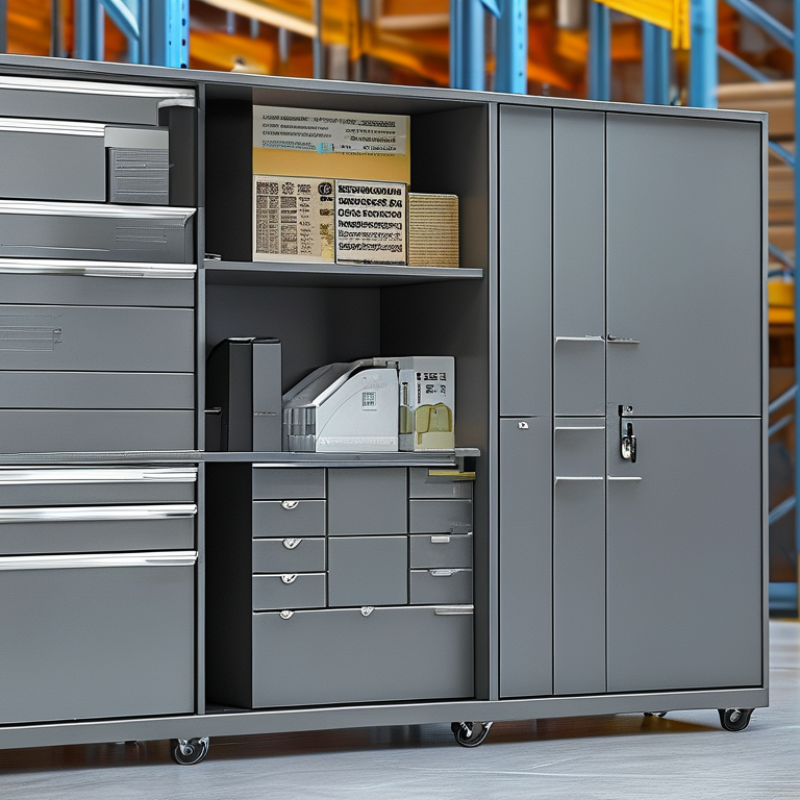
2026 Top Heavy Duty Storage Cabinet Types for Global Buyers
In 2026, global buyers are seeking storage solutions that combine strength, flexibility, and measurable workplace safety. A Heavy Duty Storage Cabinet must do more than hold tools or components. It should support heavy loads, protect valuable inventory, and remain practical during daily use. Steel construction, reinforced shelves, lockable doors, and adjustable layouts are now important purchasing factors. Small details matter.
This guide examines major cabinet types for factories, warehouses, workshops, laboratories, and commercial facilities. Options may include drawer cabinets, sliding-door cabinets, modular units, mobile cabinets, and corrosion-resistant models. Each design serves a different operating condition. A busy maintenance room may need quick-access drawers, while a warehouse may benefit from tall shelves and pallet-compatible dimensions. Real-world experience shows that capacity claims can be confusing. Buyers should check usable shelf load, not only the advertised cabinet rating.
Quality evidence should guide every decision. Look for verified material specifications, load testing, coating details, warranty terms, and consistent manufacturer documentation. Regional standards, electrical requirements, delivery conditions, and after-sales support also deserve careful review. A lower purchase price may create higher installation or replacement costs later. That is easy to overlook.
No cabinet fits every site. Even experienced buyers can misjudge clearance, door movement, or floor strength. Measure the space twice. Then compare suppliers objectively. This overview helps international purchasers connect cabinet types with actual storage demands, procurement risks, and long-term operating value. It also recognizes an uncomfortable truth: product labels are not always as precise as they should be.
What Defines a Heavy Duty Storage Cabinet in 2026
In 2026, a heavy duty storage cabinet means more than thick steel and a dark finish. It must carry documented loads without twisting, sagging, or unsafe door movement. The useful question is simple: how does it perform after years of daily use? Real capacity matters. Buyers should check shelf ratings, cabinet weight, weld quality, and load-test methods. A shelf rated for 100 kilograms may fail when weight is concentrated at one corner.
Reliable cabinets use reinforced frames, adjustable shelves, secure hinges, and stable leveling feet. Anti-tip systems are essential when drawers or doors open fully. Powder-coated surfaces help resist scratches, moisture, and workshop chemicals, but coating alone proves little. Look for uniform coverage, clean edges, and clear corrosion-test evidence. In warehouses, small gaps and uneven floors expose weak designs quickly. This is where specifications meet experience.
For global buyers, credible suppliers provide drawings, material details, inspection records, and packaging data. They explain whether ratings apply to static storage or repeated handling. That distinction is often missed. Cabinets should also fit local workflows, pallet sizes, door clearances, and service access. Digital locks or tracking features can help, yet they should not replace strong mechanical protection. I would question any product claiming extreme capacity without independent testing. Even a good design may need refinement after installation. Measure twice. Review feedback from the people who load it every day.
Main Types of Heavy Duty Storage Cabinets for Global Buyers
2026 Top Heavy Duty Storage Cabinet Types for Global Buyers
Heavy duty storage cabinets vary by load, access method, and workplace conditions. Choosing the correct type starts with the items being stored.
Adjustable shelf cabinets suit tools, spare parts, cartons, and mixed industrial supplies. Their shelves can move as inventory changes. Check the load rating for each shelf, not only the total cabinet capacity.
Drawer cabinets provide faster access for small metal parts, fasteners, and maintenance tools. Full-extension drawers improve visibility, but they need smooth runners and a reliable anti-tilt system. A poorly balanced drawer unit can become dangerous.
Mobile cabinets work well in workshops that change layout frequently. Locking casters should support the cabinet when fully loaded.
Static cabinets are better for fixed warehouse zones and heavier long-term storage.
Modular cabinets help global buyers expand storage in stages. This reduces wasted floor space, although matching modules from different suppliers may prove difficult.
For humid or coastal facilities, consider powder-coated steel and corrosion-resistant hardware. Fire-resistant cabinets may suit locations needing controlled storage for sensitive workplace materials.
Requirements differ by country, so buyers should verify testing documents and local installation rules. A high load rating can mislead without information about shelf spacing, cabinet anchoring, and floor strength.
The practical choice is not always the largest cabinet. Smaller units may improve access, counting accuracy, and daily safety.
Key Materials, Load Ratings, and Structural Features
Material choice sets the cabinet’s working life. Cold-rolled steel offers dependable rigidity for warehouses, workshops, and maintenance rooms. Thicker steel resists dents, but it also increases shipping weight. Stainless steel suits humid areas, though its higher cost needs careful justification. Powder-coated surfaces improve corrosion resistance when preparation and coating thickness are consistent. Coating alone is not magic.
Load ratings need practical interpretation. A cabinet rated for 800 kilograms may require evenly distributed weight. Shelves often carry less than the full cabinet body. Buyers should check whether ratings apply per shelf, per bay, or to the complete unit. Heavy tools placed at the front can stress runners and doors. I have seen impressive specifications fail during uneven loading. That detail deserves more attention.
Structural design affects daily safety and efficiency.
Reinforced uprights, folded edges, welded joints, and adjustable beams improve stability. Full-extension drawers need strong runners and controlled movement. Lockable doors protect contents, while ventilation slots help reduce internal moisture. A wide base lowers tipping risk, but floor conditions still matter. Anchor points are valuable in busy workspaces. Buyers should request test methods, load diagrams, material thickness, and inspection records. Regional transport conditions may expose weak frames before installation. A cabinet can look solid and still twist under diagonal force. That is why hands-on checks remain useful, even when technical documents appear complete.
How to Match Cabinet Types with Industrial Storage Needs
2026 Top Heavy Duty Storage Cabinet Types for Global Buyers
Matching a cabinet to industrial storage needs starts with the materials, not the appearance. A workshop storing hand tools may need drawer cabinets with full-extension runners, reinforced frames, and labeled compartments. Each drawer should support the actual load, including sudden tool placement. A cabinet rated for 80 kilograms per drawer may perform poorly when unevenly loaded every day. Measure the heaviest items.
For chemicals or maintenance fluids, choose steel cabinets with sealed shelves, spill-control trays, and secure doors. Ventilation requirements can vary by site and local safety rules, so buyers should confirm them with qualified safety staff. Outdoor operations need weather-resistant finishes, raised bases, and drainage-friendly layouts. Even then, corrosion can appear around hinges and floor edges. That detail is easy to miss.
Large factories often benefit from modular cabinets or pallet-sized storage units. These systems suit standardized parts, but they can waste space when component sizes change often. Mobile cabinets improve access beside assembly lines, while fixed units usually provide stronger long-term stability. Check aisle width, forklift movement, shelf adjustment, and anchoring points before ordering. A cabinet can be strong yet poorly matched. That happens.
Use real inventory data during selection. Record dimensions, weight, access frequency, and future expansion plans. Experienced facility teams also inspect weld quality, lock operation, coating thickness, and replacement-part availability. Product documents help, but site testing reveals more. A small trial installation may expose clearance problems before a full purchase. Perfect planning is rare. Careful review is better.
Global Buying Factors: Safety, Compliance, Delivery, and Cost
2026 Top Heavy Duty Storage Cabinet Types for Global Buyers
Global buyers need more than a strong steel cabinet. They need a safe, compliant, and predictable purchasing plan. Choose drawer cabinets for small tools, shelving cabinets for boxed parts, and mobile units for controlled movement. For heavy loads, check the actual shelf rating, steel thickness, weld quality, and anti-tip design. A cabinet holding 500 kilograms needs even loading and a stable floor.
Safety requirements vary by destination and workplace. Ask for current test reports, material details, load calculations, and installation instructions. Fire-resistant models require verified testing, not only thick doors or bright labels. Delivery also matters. Welded cabinets may provide better strength, but knock-down designs can reduce shipping volume. Confirm pallet dimensions, moisture protection, unloading equipment, spare parts, and estimated customs documents before payment.
Tips: Compare total landed cost, not only the factory price. Include packaging, freight, duties, local transport, assembly, and possible storage fees. Request photos of packed units and inspect one sample before a large order. A low quote can look attractive; I have seen weak packaging create expensive damage. Small details matter. Recheck currency, delivery terms, and warranty coverage. No checklist is perfect, so leave room for local feedback after installation.
2026 Top Heavy Duty Storage Cabinet Types for Global Buyers - Global Buying Factors: Safety, Compliance, Delivery, and Cost
| Cabinet Type | Typical Application | Typical Construction and Load Features | Safety and Compliance Considerations | Indicative Capacity Range | Indicative Unit Cost (USD) | Delivery and Logistics Factors | Best Fit for Global Buyers |
|---|---|---|---|---|---|---|---|
| Heavy-Duty Steel Shelf Cabinet | General industrial parts, tools, maintenance supplies, PPE, packaged components, and warehouse inventory. | Welded or reinforced steel body, adjustable shelves, lockable hinged doors, and powder-coated corrosion-resistant finish. Common shelf ratings range from approximately 100 to 300 kg per shelf when evenly distributed. | Confirm the tested shelf load, anchoring method, door strength, sharp-edge protection, and local workplace-storage requirements. Fire resistance should not be assumed unless specifically tested and documented. | 800–2,000 L internal volume; commonly 4–6 adjustable shelves. | Approximately $250–$900, excluding freight, duties, and installation. | Usually easier to ship as a standard packaged product. Check knock-down versus fully welded construction, carton dimensions, pallet requirements, and corrosion protection for sea freight. | General-purpose industrial storage where high mechanical strength and broad usability are more important than specialist fire protection. |
| Heavy-Duty Drawer Cabinet | Small metal parts, fasteners, tooling, dies, electrical components, and high-value items requiring organized access. | Reinforced steel carcass with ball-bearing drawer slides, label holders, central locking, and high point-load capacity. Drawer ratings commonly range from approximately 50 to 200 kg per drawer, depending on design. | Verify the load rating for each drawer, anti-tilt interlock, lock performance, ergonomic handle design, and anchoring requirements. Anti-tilt mechanisms help reduce the risk of a loaded cabinet tipping when drawers are opened. | 20–60 drawers; approximately 500–1,500 L total storage volume. | Approximately $600–$2,000, excluding freight, duties, and installation. | Heavy net weight can increase ocean and inland freight cost. Confirm whether drawers are secured for transport and whether delivery requires a tail-lift truck or special unloading equipment. | Factories, maintenance departments, tool rooms, and distribution centers needing fast identification and controlled access to small components. |
| Mobile Tool and Storage Cabinet | Maintenance workshops, production lines, repair stations, laboratories, and areas where tools must move between work zones. | Steel cabinet with industrial casters, push handle, drawers or shelves, wheel brakes, and sometimes a worktop. Typical total payload is approximately 300–1,000 kg, subject to caster and frame design. | Check caster load rating, brake effectiveness, stability during movement, drawer interlocking, handle strength, and floor compatibility. Mobile units should not be treated as fixed storage without suitable securing provisions. | 500–1,200 L; commonly 4–10 drawers or mixed shelf-and-drawer layouts. | Approximately $450–$1,800, excluding freight, duties, and installation. | Casters and protruding handles increase packing volume. Confirm ramp access, door widths, elevator limits, and whether the product ships assembled or partially assembled. | Facilities that require flexible workstation layouts and frequent movement of tools or production materials. |
| Chemical-Resistant Storage Cabinet | Corrosive chemicals, laboratory reagents, cleaning chemicals, and maintenance liquids that may attack ordinary painted steel. | Common designs use corrosion-resistant polymer, polyethylene, stainless steel, or chemically resistant internal liners. Leak-retaining shelves or sumps are used to contain spills. | Material compatibility must be checked against the specific chemicals, concentrations, temperatures, and exposure time. Separate acids, bases, oxidizers, and incompatible substances according to the applicable safety data sheets and local regulations. | 100–1,200 L; shelf or sump capacities vary by model and jurisdiction. | Approximately $500–$2,500, excluding freight, duties, and installation. | Polymer cabinets may be lighter than steel but can have larger package dimensions. Prevent freezing, excessive heat exposure, and deformation during container transport. | Laboratories, water-treatment facilities, manufacturing plants, and maintenance areas handling corrosive or chemically aggressive products. |
| Flammable-Liquid Safety Cabinet | Storage of flammable and combustible liquids in approved containers at workplaces, laboratories, workshops, and industrial facilities. | Double-wall steel construction, self-closing or manually closing doors, raised leak-containment sill, adjustable shelves, and grounding provisions on selected models. Common nominal capacities include 12, 24, 30, 45, and 60 US gallons. | For United States projects, review OSHA 29 CFR 1910.106 and applicable fire-code requirements. For international projects, confirm the required local standard; EN 14470-1 addresses fire-resistant safety storage cabinets for flammable liquids. Certification, fire rating, ventilation rules, segregation, and maximum quantities must be verified for the destination country. | Approximately 45–230 L nominal cabinet capacity; actual permitted quantity depends on container type, liquid classification, and local code. | Approximately $700–$3,000, excluding certification, freight, duties, and installation. | Heavy steel construction increases freight weight. Check dangerous-goods documentation when cabinets are shipped with contents, import classification, pallet stability, and site access for unloading. | Buyers requiring documented fire-safety performance and controlled storage of flammable liquids rather than ordinary chemical shelving. |
| Gas Cylinder Storage Cabinet | Compressed gas cylinders used in laboratories, welding areas, healthcare facilities, and industrial production. | Ventilated steel enclosure with cylinder restraints, adjustable brackets or chains, lockable access, and openings sized for safe ventilation. Capacity depends on cylinder diameter, height, and internal restraint arrangement. | Follow local compressed-gas, fire-code, ventilation, and occupational-safety requirements. Cylinders should be secured upright, separated by compatibility where required, protected from heat and impact, and handled with suitable caps and valves. | Commonly 1–12 cylinders, depending on cylinder size and cabinet layout. | Approximately $500–$2,500, excluding freight, duties, and installation. | Confirm cabinet height, doorway clearance, anchoring points, ventilation orientation, and whether the shipment is classified as oversized. Cabinets should be installed on a stable, level surface. | Facilities needing controlled access and physical protection for compressed-gas cylinders at the point of use or in designated storage areas. |
| Modular Industrial Storage Cabinet | Large factories, warehouses, distribution centers, and projects requiring expandable storage across multiple work areas. | Configurable bays, interchangeable shelves, bins, drawers, dividers, and optional plinths or overhead modules. Load capacity depends on the frame, shelf span, bracing, and anchoring system. | Request engineering load tables for the complete configuration rather than relying on individual component ratings. Verify seismic anchoring where applicable, anti-tip features, aisle clearance, and compatibility between modules. | 1,000–10,000+ L per connected configuration. | Approximately $800–$5,000 per module or starter configuration, excluding freight, duties, and installation. | Flat-pack or knock-down designs can reduce shipping volume and simplify replacement parts. Confirm assembly labor, fastener availability, spare components, and installation tools in the destination market. | Global projects seeking scalable storage, standardized layouts, and lower long-term replacement complexity. |
| Outdoor Weather-Resistant Cabinet | Outdoor maintenance equipment, electrical accessories, tools, irrigation components, and non-hazardous industrial supplies. | Galvanized, stainless, or coated steel enclosure with rain protection, door seals, roof overhang, ventilation, and optional raised base. Performance depends heavily on the enclosure design and coating system. | Specify the required ingress-protection level, corrosion category, UV resistance, wind loading, drainage, and temperature range. Outdoor cabinets for electrical equipment may require an enclosure rating appropriate to the installation environment. | 500–3,000 L; shelf loads commonly range from approximately 75 to 250 kg per shelf. | Approximately $700–$3,500, excluding freight, duties, foundations, and installation. | Large surface area can increase wind and container-space requirements. Confirm lifting points, foundation details, anchoring hardware, condensation control, and coastal corrosion protection. | Construction sites, utilities, agricultural facilities, transport infrastructure, and industrial locations without fully enclosed storage rooms. |